On March 14th, William Lewis Judy, on officer in WWI, wrote a short piece on the contributions of the Prairie Division (the 33rd Division) of the American Expeditionary Force. On March 16th, Great Uncle George Sherwood wrote home and included a copy of the mimeographed hand-out that he had received. I have looked around the internet and have not found a copy of it thus far. Apparently William Judy wrote a book called A Soldier's Diary which gave a day by day account of his experiences in WWI, but it seems to be out of print. But his immediate impressions are recorded here, as usual saved by Susan Sherwood Weber our loveable if slightly eccentric pack-rat. It was obvious that in the year that George was "over there" he received at least 150 letters, none of which seem to have survived the trip home and which is explained in his letter.
Echternach, Luxembourg
March 16, 1919
To All the Dear Ones at Home:
Sometimes I wonder if you don’t get rather tired of these letters sent to you all collectively, but there isn’t news or time to write each one separately, and after all I presume it is as much joy or sorrow to read my poor attempt at correspondence all together as it would to write short missives to each.
This is Sunday and as I’m sitting on the bed in my room with a book as a writing pad, instead of being in the office. Just went thru a bunch of the old letters for home, dating back as far as Nov and reluctantly consigned all but two to the flames as it is impossible to keep much of that sort of thing around when it comes to a move. While no moves seem to be contemplated for awhile, I would much rather go thru them (the letters) at leisure and treasure up their messages in my heart and pick out a few to keep a little longer, than to have to throw them to the fire in an impersonal bundle when orders do come. I hope they come soon as I think I need a change of scene. I feel like a bird in a cage.
The ankle is getting along as well as can be expected under the circumstances. Now use only our cane and while it is very sore and pains while walking or using it, it seems to be slowly improving.
There is a little rumor now that we may go home via Germany & Holland. Wouldn’t that be a proper and fitting sequence of events and windup for the career of the Fighting Yellow Cross Div in Europe. Am sending a little write up one of the divisions men got up.
We have had some wonderful weather the past week but today is cloudy and cool and not so pleasant. Expect to go to the cinema this evening as there is a continuance of the show we saw there last week which is pretty good. Don’t you want to go along?
Worked over at the office all of the morning and ought to be there this P.M. but don’t propose to do it as my system is crying for relaxation. Someway, they can’t seem to be able to let us office force get away from it holidays or Sundays any more than they did in campaign times. I wonder what they think mere men are made of. It isn’t making me any thinner but never had my nerves as raw or felt so keyed up as I have the last two months. But the old German saying applies very well. “So geht es im krieg.” Will I know how to act on a Sunday back in civilian times I wonder?
By now I hear you all worrying and saying “poor overworked boy.” So I’ll hasten to add that there is probably no need for worry, and I guess what ails me most is “I want to go home.” Now we are stared in the face with the proposition that our files do not meet the Gov’t requirements, so the general upheaval for the next month won’t probably leave me much time for lengthy or interesting letters. Expect Johnnie and Willets back from leave this week which will make us less short handed, tho.
The enclosed service stripe is my very first one, and was worn on my overcoat till we got some new ones at Aix-les-Baines. The ticket took me to the top of Mt. Revard and back while we were at Aix on the cogwheel railroad. The yellow slip is a check from a ticket to the local cinema. May have sent one of those before. Now I’ve got to ring off and shave.
Love again and again to all.
George Sherwood
108th Engineers, Amer. E. F.
Censored: P.S. Thompson
Captain U.S.A.
T H E P R A I R I E D I V I S I O N
By William Lewis Judy.
All right reserved except where credit is given.* of course this was 1919
The Thirty-third Division has a nick-name, a distinguishing insignia, and a rattling reputation.
In the States they called us the “Prairie Division”. Over here we are the “Yellow Cross Division.” When we shall shake hands again with the Goddess of Liberty and smell again that familiar smell of the Chicago Stock Yards, we shall once more be the “Prairie Division”.
Now, who are we, anyhow? Well, we fought with the bloomin’ British on the plains of Picardy in Northern France in July and August, 1918, and when the decorations were handed out on that bright summer’s day on the green behind the old chateau at Molliens-au-Bois, King George himself was there to pin the medals on the breasts of the Illinois boys.
We fought side by side with the Tommies, -- good pals they were, -- and with the Americans of the British Empire – those fighters after our own hearts – the Aussies – I mean the Australians, the daredevils of a rough and ready Empire. They it was who paid us the biggest compliment ever given a Yank crowd over here. The whole world now knows the famous phrase and I’ll tell you how it came about. The Aussies celebrated the Fourth of July with us at Hamel when we went over the top together up near Albert, and after it was all over, they took us by the hand and said: “You’ll do us, digger, but you fellows are damned rough”. Here, too, took place an event that shall be forever glorious in the annals of England and America, here for the first time in history the soldiers of the two mighty nations fought side by side in a common cause, and this event shall grow more glorious and more sacred in years to come when these two mighty nations look back to it as the first symbol of the new and greater union between them.
We fought with the French and now we are to get fifty Croix de Guerre[1]. The King of Belgium heard about us and is sending us eight of his medals. The Congress of the United States
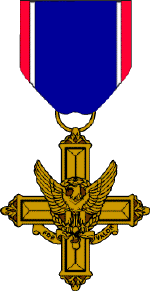
gave us seven Medals of Honor. They have given forty-eight to the whole A.E.F. and the Prairie Division is wearing one-seventh of the total. Pretty good, eh? The big safe at Division Headquarters is now too small for it is crammed with D.S.C[2]’s., from our own G.H.Q. – one hundred and ten to date, to be exact – and more of them on their way.
We have a lot of doughboys like Corporal Paul Hobschied of the 131st Infantry. He’s wearing a D.S.C. because up at Chipilly Ridge he laughed at the Boche snipers, made a dash at them, on his way stopped at a German dug-out, rapped on the door with a few hand grenades, and single handed chased out thirty German’s yelling “Kamerad”, and brought them back as prisoners.
Then there is Corporal Jake Allen, another of Joe Senborn’s boys. Jake and his squad charged a machine gun nest and himself stuck the bayonet into five Germans. The fifth Boche was tough and the Corporal’s bayonet broke off inside of him. But Jake gave him the butt of the rifle, sent one more German to Kingdom Come, and captured the remainder of the crew. In the Prairie Division, we don’t look down on Corporals since these things happened.
We’ve a buck private in the 124th Machine gun Battalion, Clayton Slack – slack by name but not by nature. He’s going to get a Belgium Medal, a Croix de Guerre, a Medal of Honor, and maybe a lot of others, because all alone he rushed a machine gun nest, tagged ten German’s as prisoners, grabbed two loaded machine guns which were killing our men, turned ‘em around and gave the Germans Hail Columbia with a shower of their own bullets.
Now I come to the grand old man of ‘em all – Colonel Joe of the 131st, of the Dandy First of the Old Illinois National Guard. He’s sixty-three, but likes a fighting spree. Out in the front he went at Grossaire Wood, and led his men over the top, across No Man’s land, and on the run, took a hill that the Germans said they’d hold forever. They’re still there holding the hill, but hiding under the ground and some wooden crosses. Well, the Colonel had his steel hat knocked off by the burst of a shell, but say – have you seen him on dress parade? There’s a Distinguished Service Order which the King of England gave him and I think he’s the only American officer wearing one of ‘em. There’s our own D.S.C. – he’s got that, of course. And there’s a Belgium medal too that is his pride.
------Ask a Boche where he had the hottest time of his life and he’ll tell you at Consenvoye Bridge, when, Colonel Allen’s engineers n the lead, the Prairie Division chase him out of the Bois de Forges, held by the enemy for four years with the boast of the Boche that it could never be captured – especially by Americans. ------ [George added arrows & “Oh! You 108th!”]
We have fought everywhere in the A.E.F. We have been with the British, with the French, with the French Colonials, and with our own troops. There are three American Armies – First, Second and Third – and we’ve been in all of ‘em. There are nine American Corps and we’ve been in all of them except the First and Eighth. We’ve got the record in this regard.
Our troops have camped along the North Sea, on the Somme, on the Meuse, and on the Moselle. They have passed through Chateau Thierry; they have bivouacked in Germany; they have rested in the shadow of the Amiens Cathedral; they have marched through the shell-torn streets of Verdun; they have eaten bully-beef in Alsace-Lorraine; and now they are wintering in Diekirch that famous resort of the Grand Duchy of Luxembourg. From Texas to Deutschland we have traveled and now we know it’s true what they say – “Join the Army and see the world.”
What Division captured more prisoners and more guns, and advanced more kilometers than any other Division except three of [or?] four? The Prairie Division.
What Division captured 1436 prisoners in one day? The Prairie Division.
What Division had a general wearing a wound chevron? The Prairie Division.
What Division was one of the five American Divisions rated by the German High Command as first-class? The Prairie Division.
What Division Commander was praised by G.H.Q because the horses of his Division and the care of them “stood as a perfect model of the standards that ought to exist in these matters throughout the Army? The Prairie Division.
Our Divisional colors are yellow and black; fast colors, guaranteed not to run. The design is a yellow cross on a black circular background two inches in diameter. Yellow is an unusual color for a fighting crowd, but in far-away Texas, when we marked our equipment for over-seas, Colonel Gardenhire had only yellow paint, and that is why we have used yellow. It’s a good color. It is the distinguishing color of the Cavalry and, in the Philippines, the Yellow Cross on Government property terrified the superstitious natives and kept them from stealing it. Over here it had the same effect on the Boche.
We are proud of the Yellow Cross and proud of the fighter who has been our leader from the day the Division was organized – Major General Geo. Bell, Jr., known by all the rank and file of the Regulars as “Do it Now” Bell.
When the French officially took possession of the City of Metz, the capital of Lorraine, on the 6th of October, 1918, bringing to pass their dream of half a century, the troops selected from the entire A.E F. to represent the Untied States in the grand parade before the President of the
French Republic, before Premier Clemenceau, Marshal Foch, Marshall Petain, field Marshal Sir Douglas Haig and our own General Pershing, were none other than a bunch of Chicago Lads, the battle scarred doughboys of the 131st Infantry, who had carried the Yellow Cross to victory every time they “hopped the bags.” They led the procession at Metz and the Governor-General of Lorraine said that their appearance and conduct merited the highest praise.
The boast of the Thirty-Third is that it never lost a fight, that it never received an order in battle which it did not carry out, and that an objective was never given to it that it did not take from the enemy on scheduled time. It is more than a boast – it is cold truth recorded in the books of the German armies as well as in the records o four own G. H. Q.
We came to France with a great reputation to uphold and high standards to maintain, for we are the Prairie Division; we hail from the fields of Illinois, out where the prairies begin their stretch, out where the East joins the West, and the best of the two is kept. Behind us are the traditions and glories of a great State – a State in which that other great war – the greatest until its time – gave to the nation its great leader in the White House – Abraham Lincoln, and its great leader in the field of battle – Ulysses S. Grant.
We have fought as worthy sons of worthy sires. We shall return from our long journey strong men and noble, victors and proud, because in the hottest of the battle, in the front ranks of the bravest, we fought as only Americans can fight. We shall march down Michigan Boulevard, victors and glad, yet with a bit of shadow in our faces, for we are not forgetful of our brave comrades who went away with us and with us did not return, because on the sacred soil of France they fell fighting bravely for their flag and the honor of their Division, and forever more they rest on the fields where their fame was won – in the shades of the forest of the Argonne and by the banks of the Somme.
They did not die in vain, neither have we fought in vain who fought by their side as they fell. They who in later years shall wear the Yellow Cross in token that they fought with the Prairie Division, shall wear a badge of high honor, and a fitting distinction for the brave men and fearless fighters they showed themselves to be.
Written At Diekirch, Grand Duchy of Luxembourg, Europe,
Fourteenth day of March, nineteen nineteen.
[1] The croix de guerre (English translation: War Cross) is a military decoration of both France and Belgium, where it is also known as the Oorlogskruis (Flemish). It was first created in 1915 in both countries and consists of a square-cross medal on two crossed swords, hanging from a ribbon with various degree pins. http://en.wikipedia.org/wiki/Croix_de_guerre